Regulamento de bicicletas elétricas na Alemanha: um guia sobre aceleradores
A regulamentação das bicicletas elétricas na Alemanha é um tanto complexa, especialmente no que diz respeito aos aceleradores. Muitos ciclistas, principalmente aqueles que tiveram o primeiro contato com bicicletas elétricas em outros países, perguntam se um acelerador de punho ou de polegar é legal para uso em vias públicas. Este guia explica as regulamentações alemãs, muitas vezes obscuras, sobre aceleradores de bicicletas elétricas. Vamos simplificar a compreensão das principais classificações legais, analisar os diferentes tipos de aceleradores, descobrir o que caracteriza uma condução dentro da lei e alertá-lo sobre as severas penalidades associadas a ser flagrado pilotando uma bicicleta elétrica ilegal – para que você saiba exatamente para onde suas pernas estão te levando.
Este é o ponto que mais gera confusão entre os compradores de bicicletas elétricas, mas é fundamental compreendê-lo para entender a legalidade ou ilegalidade dos aceleradores. Nem todas as bicicletas elétricas são tratadas da mesma forma pela lei, sendo um dos principais diferenciais a presença ou não de um acelerador. A categoria em que sua bicicleta se enquadra determina as diversas regras — desde o uso obrigatório de capacete até a contratação de seguro. É fácil errar nessa questão e correr sérios riscos legais. Por isso, é importante que cada ciclista entenda em qual categoria sua bicicleta elétrica se enquadra antes de sair pedalando.
-
Pedelec (Bicicleta Elétrica com Pedal)
Esta é a categoria mais popular e menos restritiva. Legalmente, ela é tratada como uma bicicleta comum.
- Potência do motor: A potência nominal do motor não deve exceder 250 W de potência de saída nominal contínua.
- Corte de assistência: O auxílio do motor deve ser reduzido gradualmente e desligado completamente quando a bicicleta atingir a velocidade de 25 km/h.
- Tipo de assistência: O motor só entra em funcionamento quando você está pedalando. Este é o ponto crucial. Qualquer acelerador que consiga mover a bicicleta por conta própria (além de alguns quilômetros por hora para iniciar a pedalada) a coloca automaticamente de uma Pedelec para a próxima categoria.
-
S-Pedelec (Pedelec de velocidade)
Esses veículos são mais rápidos e potentes, em um sentido legalmente definido semelhante ao de uma motocicleta de ciclomotor.
- Potência do motor: Pode ser alimentado por um motor com potência de até 500 watts.
- Corte de assistência: O motor irá desligar a 45 km/h.
- Requisitos: É necessário possuir carteira de habilitação válida do tipo especificado (no mínimo categoria AM), placa de identificação do veículo e seguro de responsabilidade civil obrigatório. O uso de capacete também é obrigatório.
-
Bicicleta elétrica
Na rígida definição legal alemã do termo, uma "bicicleta elétrica" é um veículo motorizado que não depende da pedalada humana para se mover e que geralmente funciona por meio de um acelerador. Esses veículos se enquadram na categoria de ciclomotores leves (Leichtmofa) e exigem seguro, placa e capacete, mesmo que sua velocidade máxima seja de apenas 20 a 25 km/h.
Entendendo os aceleradores de bicicletas elétricas: legais ou ilegais
Nem todos os aceleradores são iguais, e essa diferença é crucial perante a lei alemã. Conhecer a distinção é essencial para garantir que sua moto esteja em conformidade com a lei e evitar erros dispendiosos na hora da compra. Um acelerador fora das normas é uma das maneiras mais fáceis de transformar uma moto legal em um veículo motorizado ilegal e sem licença perante a lei.
-
Acelerador ilegal (para bicicletas elétricas)
Isso inclui qualquer acelerador, seja ele de punho giratório, alavanca de polegar ou dispositivo acionado por botão, que possa acelerar a bicicleta sem que você precise pedalar a mais de 6 km/h.Se você consegue ficar parado e usar o acelerador para levar a bicicleta a 20 ou 25 km/h, então o veículo não é uma Pedelec. Ele é legalmente classificado como um ciclomotor e deve ser segurado, ter placa e o condutor precisa de carteira de habilitação.
-
Assistência jurídica para start-ups (Anfahrhilfe ou Schiebehilfe)
Por lei, esta é a única função de aceleração permitida em uma bicicleta elétrica com pedal.
- Utilidade: Ele foi projetado para ajudar você a empurrar a bicicleta a partir da imobilidade ou em baixa velocidade, e também para empurrá-la em subidas.
- Limite de velocidade: A assistência elétrica fornecida por este sistema deve ser legalmente interrompida automaticamente a uma velocidade máxima de 6 km/h.
- Dica do usuário: Ao comprar uma bicicleta elétrica, certifique-se de perguntar ao vendedor se o acelerador está funcionando. Teste-o. Ele corta a aceleração acima da velocidade de caminhada? Se acelerar ainda mais, isso significa que não se trata de um recurso legal de "Anfahrhilfe" (auxílio de condução) em uma bicicleta elétrica. Não confie na palavra do vendedor de que o acelerador foi "desativado"; a existência de um acelerador ilegal ainda pode causar problemas.

O ENGWE L20 3.0 Boost Uma potência em conformidade
Para obter as bicicletas mais capazes e prontas para uso, você deve optar por uma marca que desenvolva bicicletas de alto desempenho exclusivamente para a Europa.
Desempenho em sua essência, totalmente em conformidade.
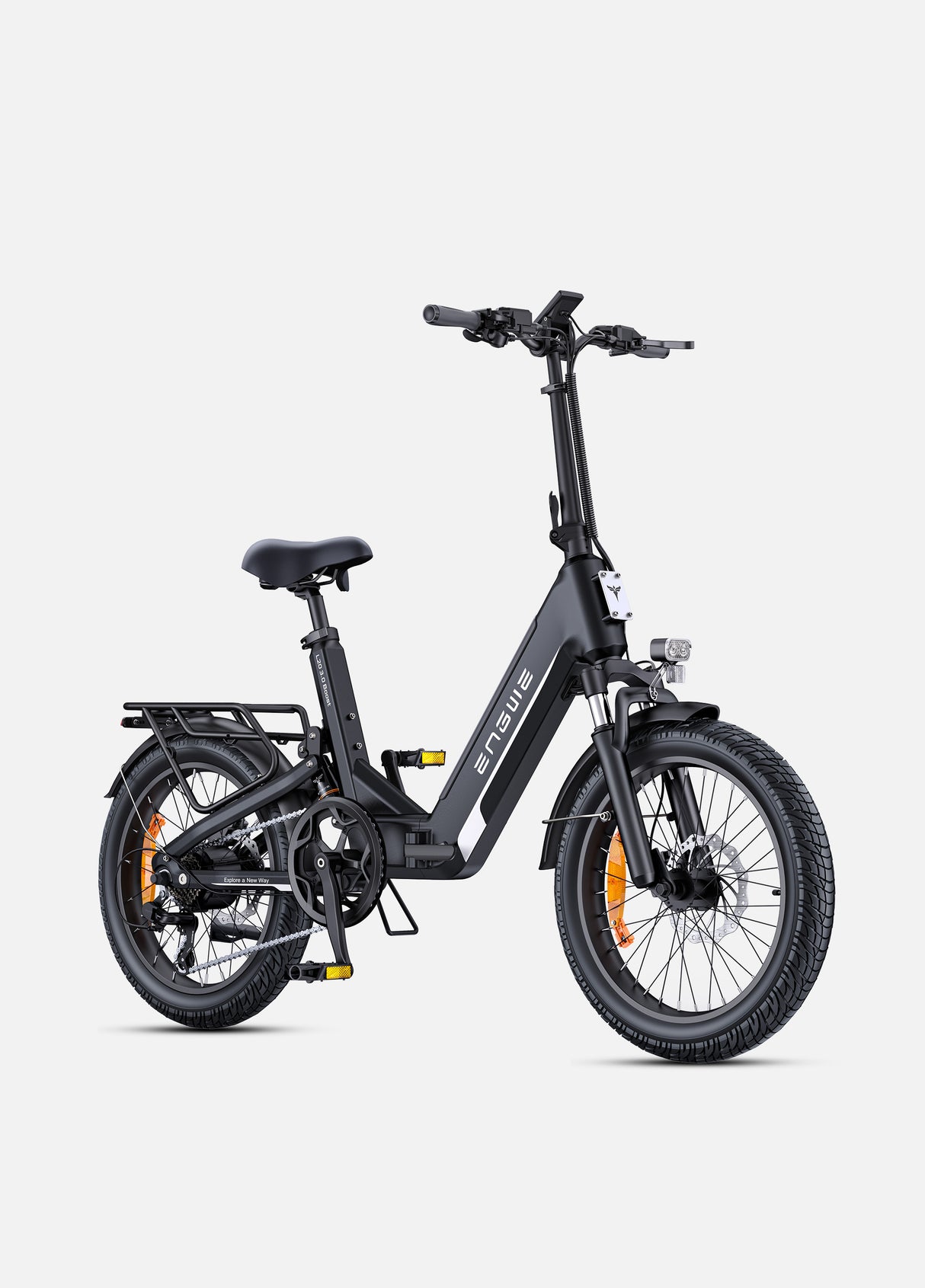
Bicicleta elétrica compacta com suspensão total, potência de 250 W e torque de 75 Nm.
Comprar agoraA estrutura da bicicleta utiliza um motor de 250 watts que segue rigorosamente as normas das bicicletas elétricas. O diferencial está no inovador Modo Boost, que proporciona um aumento instantâneo de torque de 75 Nm para subir ladeiras ou fazer conversões em linha reta para ultrapassar (tudo isso enquanto você pedala).

Conveniência incomparável
Um carregador rápido de 8A, líder no setor, carrega completamente a bateria em apenas cerca de 2 horas, um nível de conveniência incomparável com a maioria dos produtos concorrentes. A autonomia máxima de 135 km significa que você pode pedalar por dias sem precisar recarregar.
Conforto e controle incomparáveis
Esta é a primeira bicicleta elétrica compacta com sistema de suspensão total que absorve os impactos das irregularidades da estrada, proporcionando uma condução extremamente suave. Com um sensor de torque intuitivo, a potência parece uma extensão do seu próprio ritmo cardíaco, suave e fluida.
Design dobrável e prático
O design dobrável e compacto torna esta bicicleta elétrica portátil e ideal para uso em vias públicas.
| Recurso | Especificação |
|---|---|
| Motor | Motor de cubo padrão europeu de 250 W |
| Torque máximo | 75 Nm com Modo Boost |
| Bateria | 48V 13.Bateria de íon de lítio de 5Ah (648Wh) |
| Alcance máximo | Aproximadamente 135 km (PAS1) |
| Carregando | Carregador rápido de 8A (tempo aproximado de carregamento: 2 horas) |
| Suspensão | Sistema de suspensão total (dianteira) & traseira) |
| Freios | Freios a disco hidráulicos de 180 mm |
| Sensor | Sensor de torque e velocidade de rotação |
| Principais características | Tela colorida dobrável com Bluetooth |
Seu guia para comprar uma bicicleta elétrica homologada para uso em vias públicas na Alemanha.
Se você está procurando uma bicicleta elétrica homologada para uso em vias públicas na Alemanha, além de prestar atenção a marcas específicas, aqui está uma lista de pontos a considerar. Isso facilita sua decisão e resulta na compra de um veículo seguro, legal e adequado às suas necessidades. Estar atento à documentação, bem como a certas especificações técnicas importantes desde o início, pode evitar muitos problemas legais e financeiros no futuro. O ideal é contar com um revendedor de boa reputação que conheça a fundo a legislação alemã.
-
Documentação
Sempre peça um C.o.C (Certificado de Conformidade) ou uma declaração do fabricante, caso a bicicleta esteja em conformidade com a norma EN 15194 para bicicletas elétricas com assistência ao pedal (EPACs). Este documento comprova que a bicicleta atende a toda a legislação aplicável a bicicletas elétricas com assistência ao pedal.
-
Inspecione o motor
A carcaça do motor deve ter uma placa ou etiqueta identificando sua potência nominal contínua. Esta não deve ser superior a 250 W para uma bicicleta elétrica com pedal.
-
Teste o corte de velocidade
Durante o teste, certifique-se de que a assistência do motor diminua gradualmente ao ultrapassar os 25 km/h. A moto deve comportar-se como uma bicicleta normal em altas velocidades.
-
Marcas renomadas no mercado alemão
Embora a marca não seja tudo, existem diversas marcas tradicionais na Alemanha que fabricam bicicletas de alta qualidade e em conformidade com as normas para os mercados alemão e da UE há anos. Ao analisar as opções, a melhor escolha pode ser concentrar-se nos seguintes nomes consagrados do setor:
- Cubo
- Haibike
- Riese & Müller
- Kalkhoff
- Cânion
-
Dica para economizar do usuário
Comprar uma moto totalmente legalizada desde o início representa uma grande economia a longo prazo. Multas, processos e custos legais relacionados à condução de uma moto ilegal podem chegar a dezenas (ou até centenas) de milhares de euros – muito acima de qualquer economia momentânea obtida com uma importação barata e irregular.

O Alto Custo de um Acelerador de Bicicleta Elétrica Ilegal
O impacto desestabilizador de possuir um acelerador ilegal na Alemanha tem sérias implicações que vão muito além de uma simples multa de trânsito. A bicicleta, nesse estado, é interpretada não como uma bicicleta (com uma modificação nos pedais), mas como um veículo motorizado sem licença e sem seguro. Essa nova interpretação desencadeia uma série de potenciais consequências legais e financeiras que todo motorista deve conhecer. A conveniência de um acelerador de potência máxima não compensa os riscos.
-
Acusações criminais
Conduzir uma bicicleta elétrica com a designação de ciclomotor sem a devida habilitação é uma infração penal chamada "Fahren ohne Fahrerlaubnis" (Conduzir sem habilitação). Isso pode resultar em multas elevadas, pontos na carteira de habilitação e até mesmo na suspensão temporária da habilitação.
-
Desastre de seguro
Se você sofrer um acidente, seja ou não sua culpa, seu seguro de responsabilidade civil pessoal se recusará a cobrir quaisquer danos. Você será pessoal e financeiramente responsável por todos os custos, que podem facilmente chegar a dezenas ou centenas de milhares de euros em caso de lesão.
-
Confisco do veículo
As autoridades policiais têm o poder de apreender e confiscar veículos que considerem ilegais, no local. Você pode se ver envolvido em um processo caro e demorado para tentar recuperá-lo, sem sucesso.
-
Perda da garantia e do valor de revenda
Instalar um acelerador não autorizado e ilegal na sua bicicleta elétrica ou usar um modelo não compatível anulará a garantia do fabricante. Além disso, a bicicleta torna-se praticamente invendável legalmente na Alemanha, e você ficará apenas com um prejuízo financeiro.
P1: Posso usar um acelerador de polegar com minha bicicleta elétrica na Alemanha?
A1: Sim, somente se for um sistema de "assistência de partida" (Anfahrhilfe) que funcione até 6 km/h sem pedalar. Qualquer acelerador que faça a bicicleta se mover a mais de 6 km/h sem pedalar a torna um veículo motorizado ilegal, e não uma bicicleta elétrica com pedal (Pedelec).
P2: Qual é a documentação mais importante a solicitar ao comprar uma bicicleta elétrica na Alemanha?
A2: O Certificado de Conformidade (CoC) da UE é a certificação fundamental. Trata-se da declaração oficial do fabricante de que a bicicleta elétrica com pedal (Pedelec) está em conformidade com todos os requisitos legais para uma Pedelec, de acordo com a diretiva EN 15194.
P3: Existem bicicletas elétricas legais que ainda oferecem uma sensação de muita potência?
A3: Com certeza. As bicicletas elétricas de ponta dependem de sensores de torque e software sofisticados para proporcionar uma aceleração instantânea impressionante, principalmente em subidas. Recursos como o "modo boost", que oferece torque máximo, podem fornecer uma potência incrível dentro da lei, já que ainda estão vinculados à sua pedalada.
Basta obedecer a essas regras claras e objetivas para garantir que você tenha uma experiência agradável e segura, aproveitando a enorme liberdade oferecida pelo ciclismo elétrico na Alemanha.